How to Create an Easy Garden Journal You’ll Actually Use
Ever feel like you’re reinventing the wheel every garden season? You plant your seeds, cross your fingers, and hope you remember what worked (and what was a total disaster) last year. Sound familiar? If so, let me introduce you to the magic of an easy garden journal—a simple but powerful tool that can turn you into a gardening mastermind.
This post may contain affiliate links.
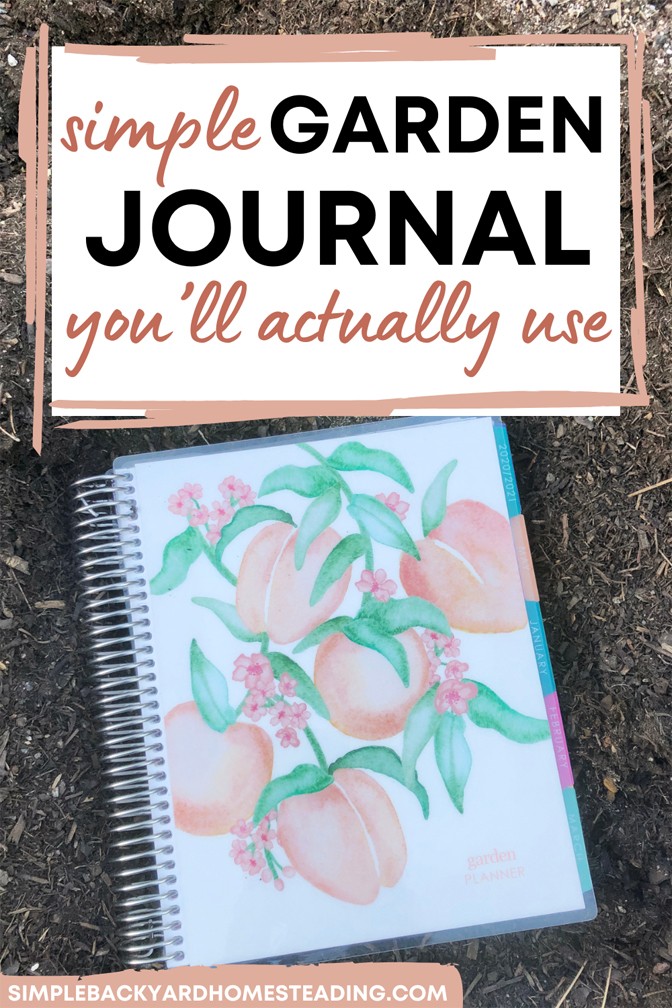
I’ve been using an Erin Condren Monthly Planner as my garden journal, and let me tell you—it’s a game-changer. It’s actually an older year’s planner (because who needs the calendar?), but the dividers help keep my notes organized by month. The EC Monthly Planner also has the option to add extra pages in the back, which I use for specific plant information.
In this post, I’ll share why you need a garden journal, how to start one, and what to track so you can keep improving your gardening skills year after year.
What is a Garden Journal?
A garden journal is exactly what it sounds like—a place to document everything happening in your garden. Think of it as your personal gardening encyclopedia, filled with insights, notes, and hard-earned lessons that will make each year’s garden better than the last.
Some things I jot down include:
- When and where I planted certain crops
- Which seeds sprouted (and which ones ghosted me)
- Growth progress and any signs of disease or pests
- Harvest dates and yields
- Solutions that actually worked (or didn’t work) for garden problems
It’s like having a gardening time machine—future you will thank past you for all the notes!
Why You Need a Garden Journal
If you’ve ever found yourself wondering:
- “What variety of tomatoes did I plant last year?”
- “When did I start my seeds indoors?”
- “How did I finally get rid of those blasted aphids?”
Then a garden journal is exactly what you need. Here’s why:
- Learn From Past Successes (and Mistakes!)
- No more repeating the same gardening fails! A journal lets you track what works and what doesn’t so you can adjust your methods accordingly.
- Track Your Garden’s Unique Conditions
- Your backyard is its own little microclimate. Keeping a record of how plants respond to your soil, weather, and care routines will help you fine-tune your approach.
- Identify Trends and Patterns
- Over time, you’ll start to see patterns—like which plants thrive in which locations, or when certain pests tend to show up.
- Stay Organized and Plan Ahead
- Having a written record means you can plan future gardens more efficiently. Want to rotate crops to avoid soil depletion? Your journal will tell you exactly what was planted where.
- Save Money and Time
- Knowing which plants actually produced well saves you from wasting money on underperforming varieties.
How to Start a Garden Journal
Starting a garden journal is ridiculously easy. You don’t need anything fancy—just a notebook, planner, or even a digital app if you prefer typing over handwriting. Here’s how to get started:
1. Choose Your Journal Format
- Physical Journal: I personally love using an Erin Condren monthly planner because the dividers make it easy to organize by month.
- Bullet Journal: A simple dotted notebook lets you create customized layouts.
- Digital Journal: If paper isn’t your thing, try apps like Evernote, Google Docs, or even a spreadsheet.
2. Decide What to Track
Here are some key things to document:
📅 Dates – When you plant, when things sprout, when you harvest.
🌱 Plant Details – Varieties, where you planted them, and how they performed.
🐛 Pests & Problems – What issues came up and how you handled them.
🌞 Weather Conditions – First/last frost dates, extreme heat waves, drought periods.
🍅 Harvest Records – How much you harvested and how it tasted.
3. Make It a Habit
Set aside time once a week (or as things happen) to jot down notes. Even quick bullet points will be super helpful in the future.
4. Include Photos & Sketches
Adding pictures of your garden’s progress can be a great visual aid. Sketching layouts of your beds will also help with planning crop rotations.
5. Use It to Plan for Next Year
At the end of the season, flip through your journal and note what you want to do differently next year. This will make planning so much easier!
Final Thoughts
A garden journal isn’t just a notebook—it’s your personal guide to becoming a better gardener. By tracking your successes, failures, and everything in between, you’ll grow more food, waste less time and money, and enjoy gardening even more. Plus, it’s oddly satisfying to look back and see how much you’ve learned over the years!
Do you keep a garden journal? What do you track in yours? Let’s chat in the comments—I’d love to hear your tips! 🌿😊